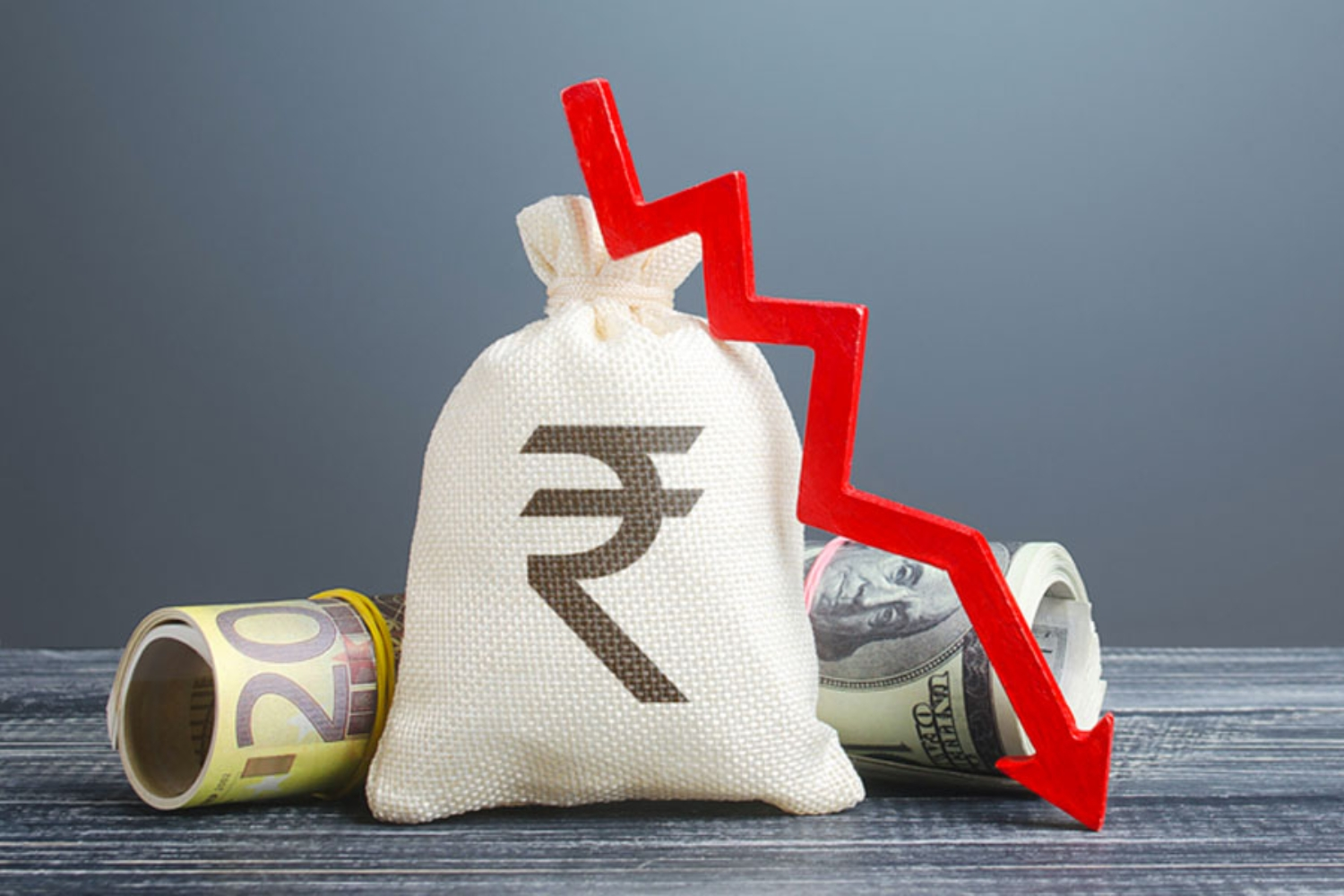


Mumbai 24th December 2025 — – The Indian rupee increased by 12 percent for a trade of 89.51 for the United States dollar in early trading on Wednesday. This marked an improvement of just a little in the exchange market amid global and domestic financial events. The gains in the early hours followed a resurgence of market activity following an era of volatility for the currency. The main assistance coming from the actions that were taken by the Reserve Bank of India (RBI) as well as external market changes.
In the market for foreign exchange interbanks in Mumbai the rupee started trade at 89.56 per dollar, and then increased to 89.51 which is a significant increase from Tuesday’s closing price of 89.63. At the start during trading the rupee registered levels in the region of 89.65 before it grew. Market participants in the currency market have attributed the increase to a mix with central bank interventions as well as global economic trends which led to that the U.S. dollar fall against the major currencies.
Reserve Bank of India Measures Help to Improve Market Tensions
Market participants have highlighted the significance in the recent Reserve Bank of India measures to boost liquidity in addition to foreign exchange activities as key factors behind the rise in the rupee. The RBI has conducted a large number of liquidity infusions, such as the purchase of securities issued by government agencies and foreign exchange intervention aimed at stabilizing market conditions and reducing the excessive volatility of the rupee-dollar exchange rate.
Forex traders pointed out that the announcement by the central bank for liquidity assistance — including significant purchases of government securities in a significant amount and additional measures, such as the dollar-rupee buy/sell exchangeis a major factor in boosting confidence in the market. Based on the opinions of traders, RBI’s constant participation in the market for spot currencies to purchase dollars has helped tamper with extreme fluctuations and slowed speculation tensions.
Global Currency Dynamics and Dollar Index Influence
The larger global economic environment was also a factor in the performance of the rupee. Its U.S. dollar index, which measures the strength of the dollar against a variety of currencies major to them, displayed an increase in its trading. The weakening of the greenback also boosted demand in the market for currencies from emerging economies, such as the rupee. A lower dollar puts less the pressure on currencies, such as those of the Indian unit, which helps them achieve gains relative to other currencies in the early trading sessions.
Analysts from the financial industry have noted that the fall in the dollar index along with the positive trend in Asian currencies in general is a factor in the resilience of the rupee. Despite the data that show strong U.S. economic growth, other factors like the positioning by investors around the world at year-end and lower consumer confidence indicators have had a negative impact against the USD, thereby assisting the currency’s growth.
Market Reactions and Equity Changes
This initial trading in the rupee was followed by mixed signals from the financial markets in general. On the front of equity in India benchmark indices registered modest gains during the early morning trading. In the morning, the BSE Sensex rose by several dozen points, and NSE’s NSE Nifty also managed to increase. These gains were indicative of a cautious, but generally positive risk-averse sentiment in the market, which is in line with the currency’s slight increase.
Traders also saw significant movement in the foreign institution investor (FIIs) within Indian market for equity. According to data on exchanges, FIIs undertook significant selling of equity on Tuesday, which highlights the intricate interaction between capital flows and valuations of currencies, even as rupee strengthened during the early trading.
Forward market and hedging Issues
Although the current market dynamics in the spot market show improvements in the value of the rupee however, the attention of the international community of foreign exchange is increasingly focusing on the forward price and the cost of hedging. Market participants have pointed out the fact that forward contracts -which are typically utilized by exporters and importers to reduce risk of currency fluctuationsare being affected by the recent volatility, which affects the rates at different durations.
The RBI’s announcement of the buy/sell swap for dollars will likely impact forward prices by introducing additional liquidity in the form of rupees and, in turn, cooling the previously high levels seen in the longer duration tenors. This could impact hedge strategies for companies, especially those that hedge their risk in dollar exposure. U.S. dollar.
The Crude Oil Price and the External Sector Perspectives
International commodity prices, particularly in the case of crude oil continue to be an important factor that influences the markets for currencies of oil-importing countries like India. Brent crude futures were trading slightly higher during the initial period however the impact on the performance of the rupee was largely insignificant. The price of oil is closely observed by forex traders because of the implications they have for the balance of trade between India and the pressures on foreign exchange demand.
Market Analysts’ Outlook
Market analysts have indicated that the rupee will likely to trade within a particular interval in relation to the U.S. dollar in the near future, which indicates the balance between the interventionist policies of the RBI as well as external pressures. The 89-90 region has been identified as a crucial trading zone and the central bank is ready to handle the support and resistance of the currency by utilizing their liquidity-related operations.
Analysts have also pointed out that the rupee’s capacity to sustain gains will depend on the flow of foreign exchange and import demand and global interest rate differentials as well as the overall risk sentiment on international markets. With year-end developments and holiday-trimmed trade volumes however, the volatility could remain high which warrants monitoring from market actors.
The conclusion of the early session Changes
Then, in short the Indian rupee’s rise of 12 points in the direction of 89.51 in comparison to the U.S. dollar in early trading on Wednesday demonstrates an albeit cautious improvement in the currency market. This has been aided by central bank intervention and relative weakness in dollar strength, relative weakness in the U.S. dollar, and improving sentiments in the domestic financial markets. As the session progressed traders continued to analyze the market’s signals, hedging trends the behavior of crude prices, as well as the flow of foreign capital in looking at the direction that the currency is heading in.